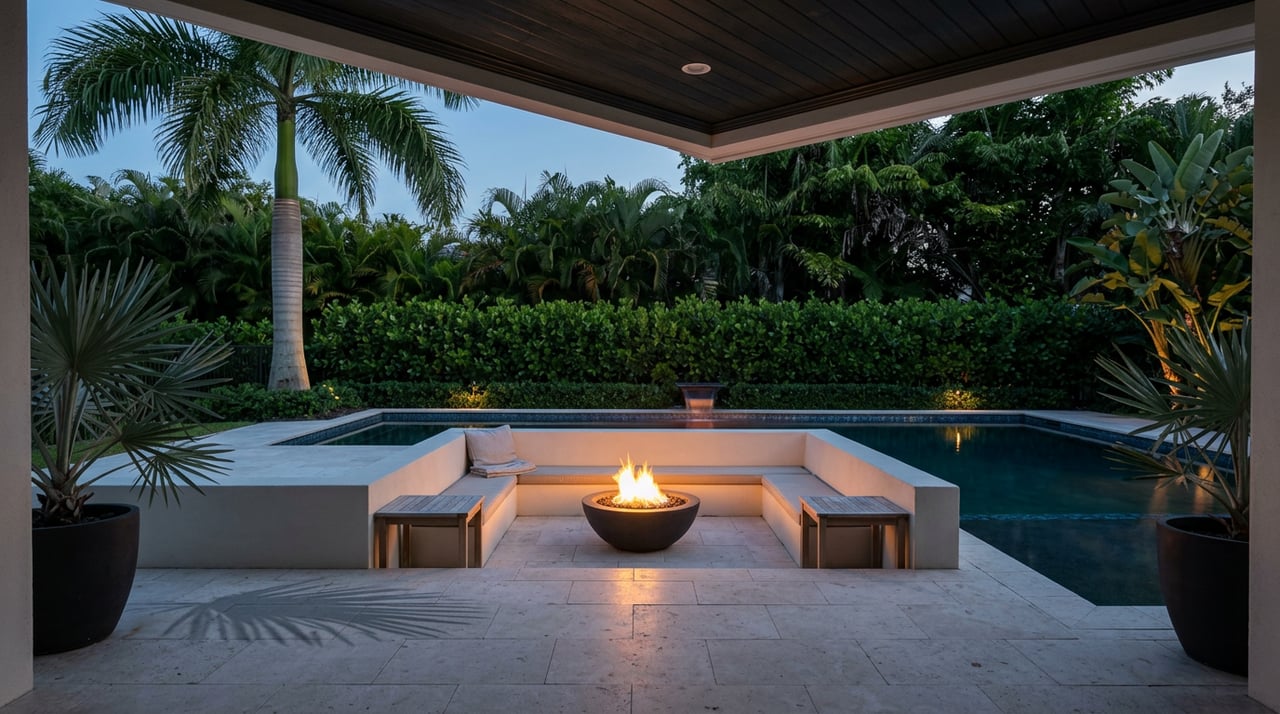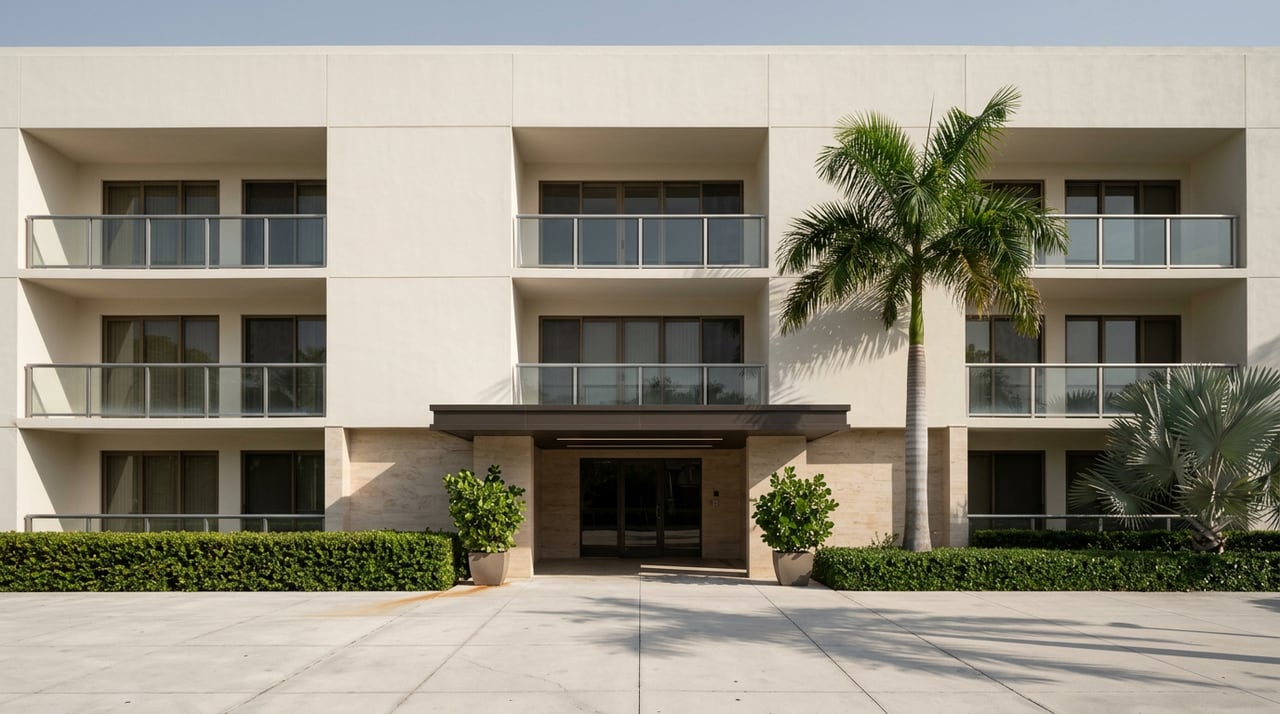
Two buildings on North Ocean Boulevard are about to disappear. The Brig O'Doon Condominium, a seven-unit building from 1951, sits next to a 1953 duplex. Turks Capital, a firm that has acquired more than $5 billion in real estate including properties in New York City and international resort markets, already owns the Brig O'Doon and has the neighboring duplex under contract. The plan on the table, reviewed by Pompano Beach's Development Review Committee on February 18, 2026, is a 15-story tower with 59 residences and 5,000 square feet of commercial space, designed by Arquitectonica, the firm behind Brickell City Centre. As of that February review, official site plans had not yet been filed, so the project was still working through rezoning and land use approval.
That is not a story about a hot oceanfront corridor getting hotter. It is a story about what happens when the cost of keeping an old building standing exceeds the cost of tearing it down. Since Surfside, that math has shifted in coastal Broward County, and it shifts a little further every year a building's structural reports and reserve numbers come due. If you own, or are shopping for, a condo in Pompano Beach right now, the same math is running in the background of your transaction whether the building in question is headed for redevelopment or not.
The Rule Everyone Gets Wrong
Most buyers assume the 25-year inspection trigger only applies to towers standing directly on the sand. It does not, at least not in Broward. Florida's statewide milestone inspection law under Florida Statute 553.899 sets the standard threshold at 30 years, dropping to 25 only within three miles of the coast. But Broward County went further. Under the county's Building Safety Inspection Program, the Broward County Board of Rules and Appeals applies the 25-year threshold to qualifying buildings countywide, not just the coastal strip, with reinspection required every 10 years after that.
That means a condo building a mile inland in Pompano Beach faces the same 25-year clock as a beachfront tower. The exemptions are narrow: single-family, two-family, three-family, and four-family dwellings with three or fewer habitable stories, plus fee simple townhouses, fall outside the program entirely. If you're comparing a mid-rise condo against a townhouse in the same price range, you are comparing two properties operating under entirely different regulatory calendars.
Two Documents, Two Different Questions
Buyers who've done some homework tend to conflate the Milestone Inspection and the Structural Integrity Reserve Study. They answer different questions.
| Milestone Inspection | SIRS | |
|---|---|---|
| Question it answers | Is the building structurally sound today? | Are reserves funded to cover future repairs? |
| Governing statute | Fla. Stat. 553.899 | Fla. Stat. 718.112(2)(g) |
| Who performs it | Licensed engineer or architect | Engineer, architect, or certified reserve specialist |
| Trigger | 25 years in Broward, then every 10 | Every 10 years for buildings 3+ habitable stories |
| A weak result means | Phase 2 investigation, repair deadline set by local building official | Reserve shortfall, mandatory funding increase |
A building can pass its Milestone Inspection with no structural concerns and still carry a SIRS that shows the association has been underfunding its roof, plumbing, and waterproofing reserves for a decade. Reading only one of the two documents tells you half the story.
Florida's reserve funding rules used to give associations an escape hatch. Owners could vote to waive or reduce reserve contributions, which is exactly how buildings like the Cricket Club in North Miami ended up hitting residents with special assessments as high as $134,000 per unit, and how Mediterranean Village in Aventura reached assessments up to $400,000 for some owners. Those numbers came from years of underfunded reserves finally catching up all at once, not from a sudden structural failure.
That escape hatch is gone for the components a SIRS covers. For budgets adopted on or after January 1, 2025, owners can no longer waive or reduce funding for the eight structural categories a SIRS identifies. Lawmakers tried to reopen that door this year. Senate Bill 722 would have let associations elect to waive or reduce SIRS reserve contributions by member vote. It died in the Senate Regulated Industries Committee on March 13, 2026. As of today, the no-waiver rule stands.
That fight in Tallahassee wasn't abstract. Governor Ron DeSantis, explaining the relief lawmakers built into last year's condo legislation, put the stakes plainly: "You had people that were going to be forced out of their condos potentially because of legislation that had come down the pipe."
Who Actually Pays When The Number Comes Due
Here is where a Pompano Beach condo transaction gets more complicated than a single-family sale. If a special assessment was levied before your contract date, it is typically the seller's responsibility under standard Florida contract language. If it was levied after, it typically becomes yours. That distinction turns on a single document: the estoppel certificate.
Under Florida Statute 718.116(8), an association has 10 business days to deliver an estoppel certificate once requested, and the certificate locks the association into the dollar figures it states. It lists the current assessment balance, any past-due amounts, and critically, an itemized list of special assessments already levied or scheduled to become due during the certificate's effective period. Once issued, the association cannot come back later and claim a higher number against a buyer who relied on it in good faith.
The document tells you what you're inheriting. It does not tell you what's coming next year if the board hasn't yet acted on a SIRS finding. That's why the SIRS and Milestone Inspection reports matter even when the estoppel certificate looks clean. A board can have a fully documented reserve shortfall sitting in meeting minutes for months before it turns into an actual assessment that shows up on the certificate.
The Two Buildings A Block Apart Can Have Nothing In Common
Not every Pompano Beach condo is carrying this risk. Salato Residences, a nine-story, 40-unit building at 305 Briny Ave. near downtown, was slated for an early 2026 delivery, with prices ranging from $2 million to $4.9 million. A buyer who closes on a unit there this year won't see a Milestone Inspection notice until roughly 2051. The reserve funding conversation for that building hasn't started because the building has barely finished construction.
Compare that to a 1970s or 1980s mid-rise a few blocks away, the kind that makes up much of Pompano Beach's older condo stock east of the Turnpike. That building is either already past its 25-year threshold or approaching it, has likely completed its first SIRS under the December 31, 2025 deadline, and is now operating under the full-funding mandate that took effect this year. Two condos with similar square footage and similar list prices can carry entirely different financial exposure depending on which decade they were built in, and the listing price alone won't tell you which one you're looking at.
What To Ask For Before You Write An Offer
Under Florida Statute 718.503, a seller must provide a prospective buyer with a specific document set before closing. Before you get past the inspection period, request:
- The declaration of condominium, articles of incorporation, and bylaws
- The association's most recent financial statement and annual budget
- The most recent Milestone Inspection report, or written confirmation that one isn't yet due
- The most recent Structural Integrity Reserve Study, including its funding schedule
- Board meeting minutes from the past 12 months, particularly any discussing SIRS findings or planned assessments
- The estoppel certificate, requested through your title company or closing agent
A weak reserve percentage paired with a Phase 2 Milestone finding is a signal worth building into your offer, not something to discover after closing.
FAQ
Does a clean Milestone Inspection mean the building has no financial risk? Not necessarily. A building can be structurally sound today and still carry an underfunded SIRS pointing toward a future assessment for roof replacement, waterproofing, or plumbing risers.
Who pays a special assessment that gets levied while I'm under contract? Contract language usually controls, and most Florida condo purchase agreements treat an assessment levied before the effective contract date as the seller's obligation, with anything levied after typically falling to the buyer. Read the assessment allocation clause before you sign.
Can financing fall through because of a building's SIRS or reserve status? Lenders increasingly scrutinize reserve funding and pending special assessments during underwriting. A conversation with your loan officer about the building's warrantability before you write an offer can prevent a surprise late in the process.
Does this apply to every condo in Pompano Beach? Only buildings three or more habitable stories fall under the SIRS and Milestone Inspection requirements. Fee simple townhouses and smaller residential buildings are exempt.
Reading a reserve study and an estoppel certificate together, and knowing what each one is and isn't telling you, is the difference between a clean closing and a costly one. If you're evaluating a condo in Pompano Beach, or trying to figure out what a building's financial position actually means for your offer, Alexa Soto can walk through the documents with you before you sign anything. Let's Connect.